The $876 Billion Wellness Real Estate Market: How Biophilic Design and Health Certification Are Reshaping Property Investment in 2026

Introduction
The global wellness real estate market has reached an inflection point that demands serious attention from institutional investors, luxury developers, and sovereign capital allocators. The market reached $876 billion in 2025 — a 5.8-fold expansion from $151 billion in 2017 — growing at 23.6% annually against a global construction industry average of 3%. The Global Wellness Institute projects this figure will cross $1 trillion in 2027 and reach $1.8 trillion by 2030, making wellness real estate one of the fastest-growing investment categories in the global built environment. The WELL Building Standard — the de facto global certification for healthy buildings — now encompasses 6 billion square feet of space across 11,615 certified projects in 137 countries, a twelve-fold increase since early 2020. The investment case is anchored by measurable financial outcomes: wellness-certified residential properties command 10–25% price premiums over comparable uncertified stock, commercial wellness buildings achieve 4.4–7.7% higher rents per square foot, and communities designed around health principles are demonstrating 10–25% higher resale values. The post-COVID permanent shift in what buyers, tenants, and corporations require from the built environment has transformed wellness from a luxury amenity category into a fundamental property underwriting variable.
The $876 Billion Market: Scale, Growth, and the Financial Case
- Market Scale and Compound Growth:The Global Wellness Institute's 2025 Build Well to Live Well report documented the wellness real estate market at $584 billion in 2024 and revised this figure upward to $876 billion for 2025 based on accelerated adoption across the Asia-Pacific and Middle East regions. The compound annual growth rate of 23.6% between 2019 and 2025 positions wellness real estate alongside AI infrastructure and data centres as one of the three fastest-growing categories in global commercial and residential real estate investment. At the regional level, Asia-Pacific leads with $350 billion (40% of the global market), followed by North America at $274 billion and Europe at $205 billion. The five fastest-growing national markets by CAGR between 2019 and 2025 are Italy (50.2%), Spain (46.1%), Saudi Arabia (33.9%), China (30.5%), and the United Kingdom (29.5%) — a distribution that reflects both premium market maturation in Western Europe and mega-project driven expansion in the Gulf.
- WELL Standard Adoption — The Certification Benchmark:The International WELL Building Institute (IWBI) reported 6 billion square feet of space engaged with the WELL standard as of July 2025 — a figure that encompasses fully certified projects, projects under certification, and registered participants. The 11,615 WELL-certified projects across 137 countries represent a twelve-fold increase since early 2020, with the steepest adoption curve in Asia-Pacific (led by Singapore, China, and Australia) and the Middle East (led by UAE and Saudi Arabia). WELL is now the third most used certification platform in GRESB's real estate assessment framework, covering 9% of all certified floor area globally — a metric that matters because GRESB scores are the primary sustainability due diligence benchmark used by institutional investors to allocate capital. Buildings holding WELL certification command a yield premium of 50–100 basis points over non-certified equivalents in institutional transaction data.
- Financial Premiums — What the Data Shows:The financial case for wellness real estate investment has moved from anecdotal to empirically documented. Residential wellness communities achieve 10–25% higher price points than comparable non-wellness luxury properties in the same submarket. Commercial wellness buildings — office, hospitality, and mixed-use — achieve 4.4–7.7% higher rents per square foot, 7–8% higher capital valuations, and meaningfully faster lease-up rates than non-certified equivalents. Rancho Mission Viejo, a wellness-certified community in California, achieved 12% higher resale prices than comparable non-wellness communities in the same price bracket. The cost side must be acknowledged: wellness real estate incurs 15–25% higher construction costs due to advanced HVAC and air purification systems, water treatment infrastructure, smart circadian lighting, low-VOC material specifications, and acoustic insulation — but this cost premium is typically recovered within a 3–5 year hold period through the combination of price premium and rental growth.
Regional Leaders: UAE, Asia-Pacific, and the Gulf
- UAE: From Aspiration to Market Maturity:The United Arab Emirates has experienced among the most dramatic wellness real estate market expansions globally: from $3.3 billion in 2017 to $14.6 billion in 2025 — a 4.4-fold increase in eight years. Dubai's residential landscape is now defined by wellness-centric master-planned communities: Jumeirah Golf Estates, Yas Acres, and the rapidly expanding Nad Al Sheba Sports collection integrate fitness infrastructure, biophilic landscaping, air quality management, and proximity to nature into community design at every price tier. Premium developments such as Six Senses Residences Dubai Marina and Kempinski Residences The Creek Dubai have demonstrated that the wellness hospitality brand association adds 20–40% to residential pricing versus unbranded equivalents in the same location. Abu Dhabi's Aldar Properties and Dubai's Emaar are both investing heavily in WELL pre-certification for all new residential launches from 2026, responding to buyer demand surveys that rank health-related amenities ahead of traditional luxury features for the first time.
- Asia-Pacific: Singapore, Thailand, and the Longevity Economy:Singapore's wellness real estate market has grown 29% annually since 2019, driven by the city-state's Biophilic City in a Garden master plan, which mandates green replacement ratios and building-integrated planting for all major new developments. Grade A wellness-certified office space in Marina Bay and the CBD commands rents of SGD 12–18 per square foot per month versus SGD 10–14 for non-certified equivalents — a 20–28% premium that institutional tenants including Google, JP Morgan, and Temasek are demonstrably willing to pay. Thailand is positioning itself as Asia's longevity economy capital for 2026–2030, with the Tourism Authority of Thailand actively partnering with wellness resort developers — SHA Wellness Clinics, RAKxa Integrative Wellness Bangkok, and Chiva-Som Hua Hin — to position Hua Hin, Koh Samui, and Phuket as integrated wellness residence and medical tourism destinations. Thailand's wellness tourism receives 562 million regional travellers annually, a captive audience for the premium villa and branded residence market adjacent to its best-known resort facilities.
- Saudi Arabia — The Most Dramatic Growth Story:Saudi Arabia's wellness real estate market is the most remarkable growth story in the sector globally: from $200 million in 2017 to $28 billion in 2025 — a 140-fold expansion in eight years — driven by Vision 2030's explicit wellness-city mandates and the development of mega-destinations including AMAALA (the "Triple Bay" luxury wellness resort on the Red Sea coast) and the Red Sea Project's Shura Island, where resort and branded residence development is built around an environmental wellness concept. Saudi Arabia ranks third globally by five-year CAGR (33.9%) and has positioned wellness as a strategic economic diversification pillar, drawing on the kingdom's status as the world's largest spender on government-directed real estate development. International wellness brands — Six Senses, Aman, Chedi, and Nujuma — have concentrated a disproportionate share of their new project pipeline in Saudi Arabia, signalling confidence in the market's depth and long-term visitor demand.
What Wellness Means in Practice: Biophilic Design, Neuroarchitecture, and Blue Zones
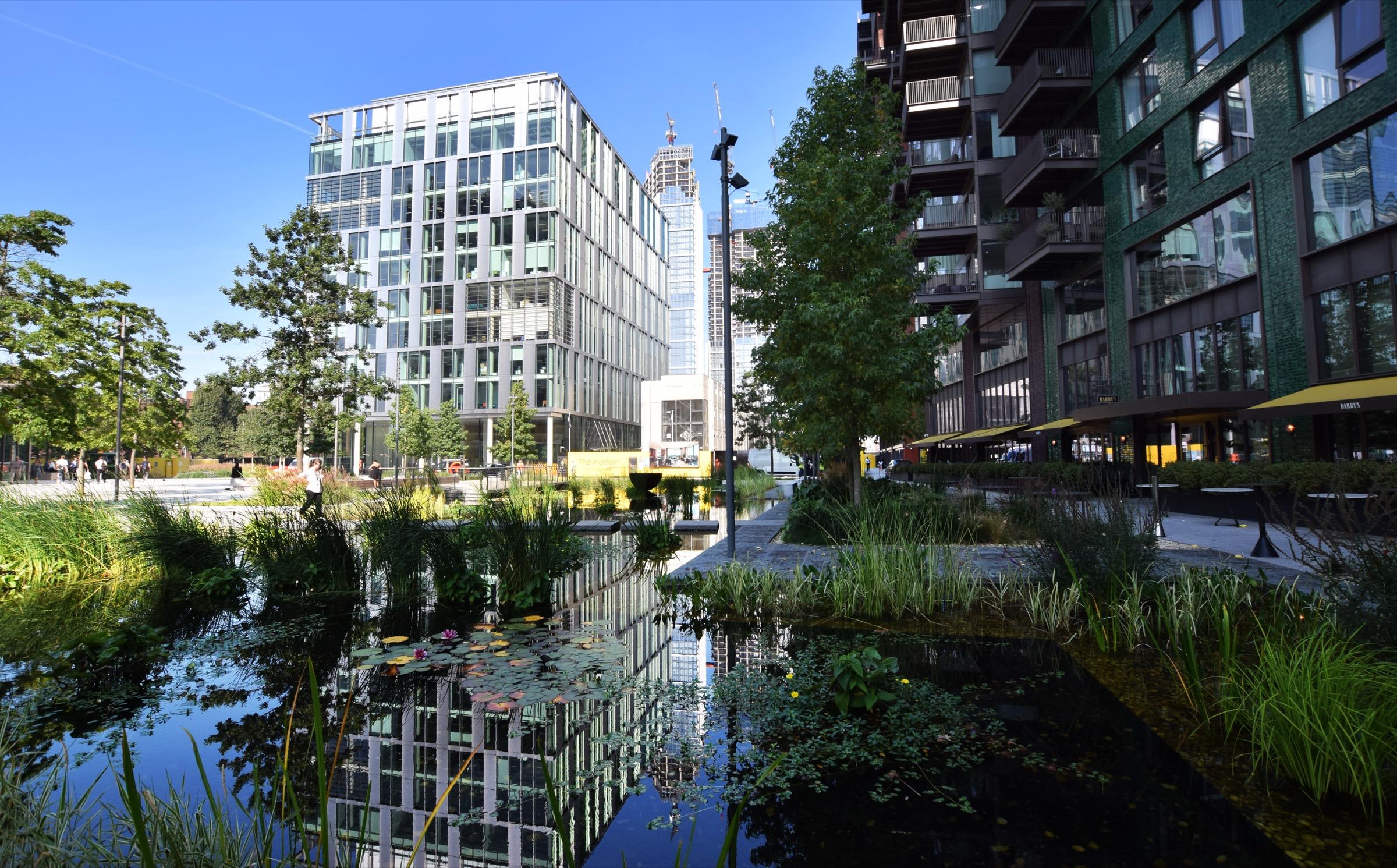
- Biophilic Design — The Highest-ROI Wellness Investment:Biophilic design — the integration of natural elements, materials, light, and vegetation into the built environment — is the wellness real estate investment lever with the most clearly documented return profile. Properties in major metropolitan areas with meaningful biophilic features (living walls, natural material palettes, water features, and direct nature sightlines) command an average 8% price premium over comparable non-biophilic properties. Homes within 1,000 feet of a park or green space achieve 8–20% higher valuations, rising to 25% in integrated nature developments where the natural element is architectural rather than incidental. For commercial real estate, the data from CREW Network's 2026 biophilic design study is more striking: Class A properties with integrated biophilic design achieve 18% higher valuations, 25–35% faster lease-up rates, and 20–50% lower energy consumption through building-integrated greenery reducing HVAC loads. Suburban residential developments with biophilic master planning are achieving 3–7% rental premiums and 15–22% faster marketing times versus comparable conventional stock.
- Mental Health Architecture — The Emerging Design Frontier:Neuroarchitecture — the application of neuroscience, environmental psychology, and epigenetics to building design — is shifting from academic research to mainstream luxury development specification in 2026. The Global Wellness Institute's Wellness Architecture & Design Initiative trends report for 2026 identifies three defining themes: primal architecture (reconnecting residents to natural materials and ancestral spatial patterns), holistic homes designed for wellness from foundation to roof rather than through amenity add-ons, and acoustic comfort as a primary health indicator. Peer-reviewed research on residential mental health outcomes is influencing design at an institutional level: studies showing that apartment design characteristics — natural light, acoustic separation, outdoor space access, ceiling height — have measurable effects on depression and anxiety scores are now incorporated into the design briefs of premium developers in the UAE, Singapore, and the United Kingdom. The residential wellness specification in 2026 includes circadian lighting systems (mimicking natural daylight wavelength throughout the day), air quality monitoring with VOC and particulate sensors, and acoustic isolation packages as standard — features that command a combined 5–10% premium in the segments where they are consistently specified.
- Blue Zones and Longevity Communities:The Blue Zones concept — communities where residents demonstrably live longer than the global average, sharing common environmental, social, and nutritional characteristics — is moving from research to real estate product. New peer-reviewed research published in The Gerontologist in December 2025 validated the longevity data underlying the original five Blue Zones (Loma Linda, Sardinia, Okinawa, Nicoya, and Ikaria), providing institutional backing for development projects explicitly designed around longevity principles. Naples, Florida achieved Blue Zone certification in 2022 after systematically restructuring its urban environment — walkability, food access, community programming — and has since recorded 12% faster home price appreciation than comparable non-certified Florida communities. The commercialisation of longevity architecture is now underway at scale: developments combining preventive medicine clinics, AI-enabled health tracking infrastructure, anti-inflammatory kitchen specifications, and thermal regulation rooms are in planning or construction in UAE, Singapore, Portugal, and the United States, targeting the ultra-high-net-worth longevity premium buyer cohort at price points of $3 million and above.
Investment Risks: Construction Premiums and Greenwashing
- Construction Cost Premium and Investment Risk:Wellness real estate's 15–25% construction cost premium versus conventional luxury property is the primary financial risk variable that investors must model carefully. The premium is attributable to advanced HVAC systems with MERV-16 or HEPA filtration, centralised water purification and mineral enrichment infrastructure, smart circadian lighting with full-spectrum dynamic capability, acoustic wall and floor assemblies, low-VOC and biophilic material specifications, and the certification management costs of WELL or FITWEL compliance. In markets where construction cost inflation has been running at 5–8% annually (UK, UAE, Singapore), the wellness premium adds a material absolute cost that narrows development margins unless the end-price premium is demonstrably achieved. The critical due diligence discipline is micro-market price evidence: in submarkets where wellness certification is still rare, the premium is more reliably achieved than in mature markets where WELL-certified supply has normalised and the premium to uncertified stock is compressing.
- Greenwashing Risk in Wellness Marketing:The wellness label has become sufficiently valuable that developers are applying it to projects with limited substantive wellness credentials — a greenwashing dynamic that is creating noise around genuine certification and complicating price premium attribution. The IWBI's WELL standard provides the most robust defence against this risk: it requires third-party testing of air quality, water quality, light quality, acoustic performance, and thermal comfort to pass certification, and mandates annual recertification to maintain the label. FITWEL certification, managed by the Centre for Active Design, provides a slightly lower-bar but still credible alternative. Investors should require third-party certification documentation as a condition of due diligence on any wellness real estate position, and should be sceptical of developer claims resting on amenity provision (gym, spa, meditation room) rather than building performance (air quality, water quality, light). The amenity wellness category has become commoditised; building performance wellness is where the defensible pricing premium lives.
Investment Strategy: Positioning for the Wellness Premium
- Preferred Investment Positions in Wellness Real Estate for 2026:The highest-conviction positions in wellness real estate for 2026 are: (1) Wellness-branded residences in UAE and Saudi Arabia — where Six Senses, Aman, and SHA-branded products are achieving 20–40% premiums over unbranded equivalents and benefiting from government-driven tourism infrastructure tailwinds; (2) WELL-certified commercial office in Singapore and London — where institutional tenant demand for certified space is driving 20–28% rent premiums and faster lease-up in undersupplied markets; (3) Blue Zone-inspired community developments in Portugal, Costa Rica, and select US markets — early-stage positioning at pre-certification pricing with 3–5 year horizon to monetise the longevity premium; and (4) Biophilic design-integrated residential in gateway cities — existing buildings or development sites where biophilic retrofit (living walls, material palette, green space integration) can be delivered at 8–12% of the certified asset's price premium payback.
- The Long-Term Investment Thesis:The wellness real estate investment thesis is ultimately demographic: as global high-net-worth wealth concentrates in cohorts aged 50–75 (the primary longevity-economy consumer group) and as the post-COVID generation of younger buyers demonstrates permanently elevated preferences for health-centric living environments, the addressable market for wellness real estate will expand faster than the general luxury real estate market for at least the next decade. The Global Wellness Institute's projection of $1.8 trillion by 2030 implies a sustained 15% annual growth rate from 2025 — achievable given current certification pipeline, institutional capital commitments, and government policy alignment in the UAE, Saudi Arabia, Singapore, and the UK. Investors entering the category in 2026 are doing so at a point of demonstrated market validation but before full institutional price discovery: the premium to uncertified real estate has not yet fully compressed, the certification supply pipeline has not yet normalised, and the longevity-residence sub-category is only just being commercialised at scale. The window for alpha-generating positioning may be 3–5 years.
This content is AI-generated and may contain errors. Figures are indicative and subject to change. Do your own due diligence and seek independent legal and financial advice.
Sources
- Global Wellness Institute — Wellness Real Estate Market 2025 Press Release
- Global Wellness Institute — Build Well to Live Well 2025 Report
- IWBI — Global WELL Adoption 6 Billion Square Feet Milestone
- CREW Network — Biophilic Design: A Strategic Advantage for Commercial Real Estate 2026
- MoneyWise — Wellness Real Estate Luxury Homes Longevity Premium
- Global Wellness Institute — Wellness Architecture & Design Initiative Trends 2026
- Blue Zones — New Research Confirms the Scientific Validity of Blue Zones Longevity Data
- Gulf Business — Inside UAE's Wellness and Sports Communities

Abhii Dabas is the Founder and CEO of INTRIC Global, the cross-border property intelligence platform for serious investors. He advises high-net-worth buyers on international real estate strategy and has evaluated residential markets across more than 40 countries.
Share
Share this article with others
Introduction
The global wellness real estate market has reached an inflection point that demands serious attention from institutional investors, luxury developers, and sovereign capital allocators. The market reached $876 billion in 2025 — a 5.8-fold expansion from $151 billion in 2017 — growing at 23.6% annually against a global construction industry average of 3%. The Global Wellness Institute projects this figure will cross $1 trillion in 2027 and reach $1.8 trillion by 2030, making wellness real estate one of the fastest-growing investment categories in the global built environment. The WELL Building Standard — the de facto global certification for healthy buildings — now encompasses 6 billion square feet of space across 11,615 certified projects in 137 countries, a twelve-fold increase since early 2020. The investment case is anchored by measurable financial outcomes: wellness-certified residential properties command 10–25% price premiums over comparable uncertified stock, commercial wellness buildings achieve 4.4–7.7% higher rents per square foot, and communities designed around health principles are demonstrating 10–25% higher resale values. The post-COVID permanent shift in what buyers, tenants, and corporations require from the built environment has transformed wellness from a luxury amenity category into a fundamental property underwriting variable.
The $876 Billion Market: Scale, Growth, and the Financial Case
- Market Scale and Compound Growth:The Global Wellness Institute's 2025 Build Well to Live Well report documented the wellness real estate market at $584 billion in 2024 and revised this figure upward to $876 billion for 2025 based on accelerated adoption across the Asia-Pacific and Middle East regions. The compound annual growth rate of 23.6% between 2019 and 2025 positions wellness real estate alongside AI infrastructure and data centres as one of the three fastest-growing categories in global commercial and residential real estate investment. At the regional level, Asia-Pacific leads with $350 billion (40% of the global market), followed by North America at $274 billion and Europe at $205 billion. The five fastest-growing national markets by CAGR between 2019 and 2025 are Italy (50.2%), Spain (46.1%), Saudi Arabia (33.9%), China (30.5%), and the United Kingdom (29.5%) — a distribution that reflects both premium market maturation in Western Europe and mega-project driven expansion in the Gulf.
- WELL Standard Adoption — The Certification Benchmark:The International WELL Building Institute (IWBI) reported 6 billion square feet of space engaged with the WELL standard as of July 2025 — a figure that encompasses fully certified projects, projects under certification, and registered participants. The 11,615 WELL-certified projects across 137 countries represent a twelve-fold increase since early 2020, with the steepest adoption curve in Asia-Pacific (led by Singapore, China, and Australia) and the Middle East (led by UAE and Saudi Arabia). WELL is now the third most used certification platform in GRESB's real estate assessment framework, covering 9% of all certified floor area globally — a metric that matters because GRESB scores are the primary sustainability due diligence benchmark used by institutional investors to allocate capital. Buildings holding WELL certification command a yield premium of 50–100 basis points over non-certified equivalents in institutional transaction data.
- Financial Premiums — What the Data Shows:The financial case for wellness real estate investment has moved from anecdotal to empirically documented. Residential wellness communities achieve 10–25% higher price points than comparable non-wellness luxury properties in the same submarket. Commercial wellness buildings — office, hospitality, and mixed-use — achieve 4.4–7.7% higher rents per square foot, 7–8% higher capital valuations, and meaningfully faster lease-up rates than non-certified equivalents. Rancho Mission Viejo, a wellness-certified community in California, achieved 12% higher resale prices than comparable non-wellness communities in the same price bracket. The cost side must be acknowledged: wellness real estate incurs 15–25% higher construction costs due to advanced HVAC and air purification systems, water treatment infrastructure, smart circadian lighting, low-VOC material specifications, and acoustic insulation — but this cost premium is typically recovered within a 3–5 year hold period through the combination of price premium and rental growth.
Regional Leaders: UAE, Asia-Pacific, and the Gulf
- UAE: From Aspiration to Market Maturity:The United Arab Emirates has experienced among the most dramatic wellness real estate market expansions globally: from $3.3 billion in 2017 to $14.6 billion in 2025 — a 4.4-fold increase in eight years. Dubai's residential landscape is now defined by wellness-centric master-planned communities: Jumeirah Golf Estates, Yas Acres, and the rapidly expanding Nad Al Sheba Sports collection integrate fitness infrastructure, biophilic landscaping, air quality management, and proximity to nature into community design at every price tier. Premium developments such as Six Senses Residences Dubai Marina and Kempinski Residences The Creek Dubai have demonstrated that the wellness hospitality brand association adds 20–40% to residential pricing versus unbranded equivalents in the same location. Abu Dhabi's Aldar Properties and Dubai's Emaar are both investing heavily in WELL pre-certification for all new residential launches from 2026, responding to buyer demand surveys that rank health-related amenities ahead of traditional luxury features for the first time.
- Asia-Pacific: Singapore, Thailand, and the Longevity Economy:Singapore's wellness real estate market has grown 29% annually since 2019, driven by the city-state's Biophilic City in a Garden master plan, which mandates green replacement ratios and building-integrated planting for all major new developments. Grade A wellness-certified office space in Marina Bay and the CBD commands rents of SGD 12–18 per square foot per month versus SGD 10–14 for non-certified equivalents — a 20–28% premium that institutional tenants including Google, JP Morgan, and Temasek are demonstrably willing to pay. Thailand is positioning itself as Asia's longevity economy capital for 2026–2030, with the Tourism Authority of Thailand actively partnering with wellness resort developers — SHA Wellness Clinics, RAKxa Integrative Wellness Bangkok, and Chiva-Som Hua Hin — to position Hua Hin, Koh Samui, and Phuket as integrated wellness residence and medical tourism destinations. Thailand's wellness tourism receives 562 million regional travellers annually, a captive audience for the premium villa and branded residence market adjacent to its best-known resort facilities.
- Saudi Arabia — The Most Dramatic Growth Story:Saudi Arabia's wellness real estate market is the most remarkable growth story in the sector globally: from $200 million in 2017 to $28 billion in 2025 — a 140-fold expansion in eight years — driven by Vision 2030's explicit wellness-city mandates and the development of mega-destinations including AMAALA (the "Triple Bay" luxury wellness resort on the Red Sea coast) and the Red Sea Project's Shura Island, where resort and branded residence development is built around an environmental wellness concept. Saudi Arabia ranks third globally by five-year CAGR (33.9%) and has positioned wellness as a strategic economic diversification pillar, drawing on the kingdom's status as the world's largest spender on government-directed real estate development. International wellness brands — Six Senses, Aman, Chedi, and Nujuma — have concentrated a disproportionate share of their new project pipeline in Saudi Arabia, signalling confidence in the market's depth and long-term visitor demand.
What Wellness Means in Practice: Biophilic Design, Neuroarchitecture, and Blue Zones
- Biophilic Design — The Highest-ROI Wellness Investment:Biophilic design — the integration of natural elements, materials, light, and vegetation into the built environment — is the wellness real estate investment lever with the most clearly documented return profile. Properties in major metropolitan areas with meaningful biophilic features (living walls, natural material palettes, water features, and direct nature sightlines) command an average 8% price premium over comparable non-biophilic properties. Homes within 1,000 feet of a park or green space achieve 8–20% higher valuations, rising to 25% in integrated nature developments where the natural element is architectural rather than incidental. For commercial real estate, the data from CREW Network's 2026 biophilic design study is more striking: Class A properties with integrated biophilic design achieve 18% higher valuations, 25–35% faster lease-up rates, and 20–50% lower energy consumption through building-integrated greenery reducing HVAC loads. Suburban residential developments with biophilic master planning are achieving 3–7% rental premiums and 15–22% faster marketing times versus comparable conventional stock.
- Mental Health Architecture — The Emerging Design Frontier:Neuroarchitecture — the application of neuroscience, environmental psychology, and epigenetics to building design — is shifting from academic research to mainstream luxury development specification in 2026. The Global Wellness Institute's Wellness Architecture & Design Initiative trends report for 2026 identifies three defining themes: primal architecture (reconnecting residents to natural materials and ancestral spatial patterns), holistic homes designed for wellness from foundation to roof rather than through amenity add-ons, and acoustic comfort as a primary health indicator. Peer-reviewed research on residential mental health outcomes is influencing design at an institutional level: studies showing that apartment design characteristics — natural light, acoustic separation, outdoor space access, ceiling height — have measurable effects on depression and anxiety scores are now incorporated into the design briefs of premium developers in the UAE, Singapore, and the United Kingdom. The residential wellness specification in 2026 includes circadian lighting systems (mimicking natural daylight wavelength throughout the day), air quality monitoring with VOC and particulate sensors, and acoustic isolation packages as standard — features that command a combined 5–10% premium in the segments where they are consistently specified.
- Blue Zones and Longevity Communities:The Blue Zones concept — communities where residents demonstrably live longer than the global average, sharing common environmental, social, and nutritional characteristics — is moving from research to real estate product. New peer-reviewed research published in The Gerontologist in December 2025 validated the longevity data underlying the original five Blue Zones (Loma Linda, Sardinia, Okinawa, Nicoya, and Ikaria), providing institutional backing for development projects explicitly designed around longevity principles. Naples, Florida achieved Blue Zone certification in 2022 after systematically restructuring its urban environment — walkability, food access, community programming — and has since recorded 12% faster home price appreciation than comparable non-certified Florida communities. The commercialisation of longevity architecture is now underway at scale: developments combining preventive medicine clinics, AI-enabled health tracking infrastructure, anti-inflammatory kitchen specifications, and thermal regulation rooms are in planning or construction in UAE, Singapore, Portugal, and the United States, targeting the ultra-high-net-worth longevity premium buyer cohort at price points of $3 million and above.
Investment Risks: Construction Premiums and Greenwashing
- Construction Cost Premium and Investment Risk:Wellness real estate's 15–25% construction cost premium versus conventional luxury property is the primary financial risk variable that investors must model carefully. The premium is attributable to advanced HVAC systems with MERV-16 or HEPA filtration, centralised water purification and mineral enrichment infrastructure, smart circadian lighting with full-spectrum dynamic capability, acoustic wall and floor assemblies, low-VOC and biophilic material specifications, and the certification management costs of WELL or FITWEL compliance. In markets where construction cost inflation has been running at 5–8% annually (UK, UAE, Singapore), the wellness premium adds a material absolute cost that narrows development margins unless the end-price premium is demonstrably achieved. The critical due diligence discipline is micro-market price evidence: in submarkets where wellness certification is still rare, the premium is more reliably achieved than in mature markets where WELL-certified supply has normalised and the premium to uncertified stock is compressing.
- Greenwashing Risk in Wellness Marketing:The wellness label has become sufficiently valuable that developers are applying it to projects with limited substantive wellness credentials — a greenwashing dynamic that is creating noise around genuine certification and complicating price premium attribution. The IWBI's WELL standard provides the most robust defence against this risk: it requires third-party testing of air quality, water quality, light quality, acoustic performance, and thermal comfort to pass certification, and mandates annual recertification to maintain the label. FITWEL certification, managed by the Centre for Active Design, provides a slightly lower-bar but still credible alternative. Investors should require third-party certification documentation as a condition of due diligence on any wellness real estate position, and should be sceptical of developer claims resting on amenity provision (gym, spa, meditation room) rather than building performance (air quality, water quality, light). The amenity wellness category has become commoditised; building performance wellness is where the defensible pricing premium lives.
Investment Strategy: Positioning for the Wellness Premium
- Preferred Investment Positions in Wellness Real Estate for 2026:The highest-conviction positions in wellness real estate for 2026 are: (1) Wellness-branded residences in UAE and Saudi Arabia — where Six Senses, Aman, and SHA-branded products are achieving 20–40% premiums over unbranded equivalents and benefiting from government-driven tourism infrastructure tailwinds; (2) WELL-certified commercial office in Singapore and London — where institutional tenant demand for certified space is driving 20–28% rent premiums and faster lease-up in undersupplied markets; (3) Blue Zone-inspired community developments in Portugal, Costa Rica, and select US markets — early-stage positioning at pre-certification pricing with 3–5 year horizon to monetise the longevity premium; and (4) Biophilic design-integrated residential in gateway cities — existing buildings or development sites where biophilic retrofit (living walls, material palette, green space integration) can be delivered at 8–12% of the certified asset's price premium payback.
- The Long-Term Investment Thesis:The wellness real estate investment thesis is ultimately demographic: as global high-net-worth wealth concentrates in cohorts aged 50–75 (the primary longevity-economy consumer group) and as the post-COVID generation of younger buyers demonstrates permanently elevated preferences for health-centric living environments, the addressable market for wellness real estate will expand faster than the general luxury real estate market for at least the next decade. The Global Wellness Institute's projection of $1.8 trillion by 2030 implies a sustained 15% annual growth rate from 2025 — achievable given current certification pipeline, institutional capital commitments, and government policy alignment in the UAE, Saudi Arabia, Singapore, and the UK. Investors entering the category in 2026 are doing so at a point of demonstrated market validation but before full institutional price discovery: the premium to uncertified real estate has not yet fully compressed, the certification supply pipeline has not yet normalised, and the longevity-residence sub-category is only just being commercialised at scale. The window for alpha-generating positioning may be 3–5 years.
This content is AI-generated and may contain errors. Figures are indicative and subject to change. Do your own due diligence and seek independent legal and financial advice.
Sources
- Global Wellness Institute — Wellness Real Estate Market 2025 Press Release
- Global Wellness Institute — Build Well to Live Well 2025 Report
- IWBI — Global WELL Adoption 6 Billion Square Feet Milestone
- CREW Network — Biophilic Design: A Strategic Advantage for Commercial Real Estate 2026
- MoneyWise — Wellness Real Estate Luxury Homes Longevity Premium
- Global Wellness Institute — Wellness Architecture & Design Initiative Trends 2026
- Blue Zones — New Research Confirms the Scientific Validity of Blue Zones Longevity Data
- Gulf Business — Inside UAE's Wellness and Sports Communities
Abhii Dabas is the Founder and CEO of INTRIC Global, the cross-border property intelligence platform for serious investors. He advises high-net-worth buyers on international real estate strategy and has evaluated residential markets across more than 40 countries.
Share this article
Share this insight with others
Share
Share this article with others
Related Market Insights
View More Market Insights
Lifestyle
Co-Living in 2026: Proven Demand, Fragile Operations, and a Premium That Vanishes Net of Cost
By Abhii Dabas · July 10, 2026
Investment Guide
Why Gulf HNW Investors Still Buy in London: The Case for UK Property in 2026
By Abhii Dabas · July 21, 2026
Investment Guide
Buying Property in Australia in 2026: A Guide for Indonesian and Malaysian Investors
By Abhii Dabas · July 17, 2026
Found this useful? Send it to someone who should read it.
Continue with INTRIC